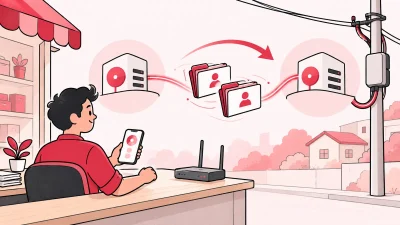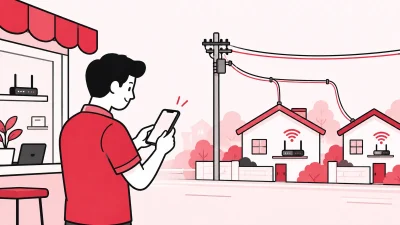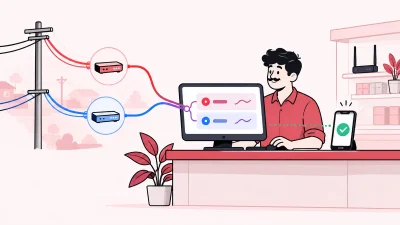
A gtpl broadband franchise can help a cable operator add internet service in the same local area where the operator already serves homes. The right first step is to confirm the local GTPL route, commercial terms, and support process before you collect a single broadband order.
Why cable operators add broadband
Cable work gives you an existing relationship with homes, societies, shops, and small offices. Broadband is a natural second service when customers already ask your team for a connection, a recharge, or help with a router.
The business is still different from cable TV. Broadband needs connection availability by address, customer records, equipment control, installation coordination, recharge follow-up, and technical escalation. Treating it as “just another monthly collection” creates confusion later.
The partnership model can give a cable operator a practical route into broadband, but your actual territory, appointment route, deposit, margin, and operating rules must come from the GTPL team handling your area.
What “GTPL broadband franchise” means in practice
People use franchise, LCO partner, broadband operator, dealer, and channel partner for similar opportunities. The name is less important than the written arrangement behind it.
In a typical local setup, you may be responsible for bringing customers, arranging the last-mile visit, collecting or facilitating recharges, looking after installed equipment, and giving first-level support. GTPL or the relevant GTPL group company controls the upstream service, plan catalogue, account activation rules, and escalation path. The exact split is not the same in every area.
Do not assume that a cable-TV relationship automatically gives you broadband rights. Ask which GTPL entity serves your pin code, whether the territory is open, and whether the offer is for an LCO, a dealer, or another type of partner. GTPL’s official contact page is a safe starting point for routing the enquiry.
If you are in a GTPL KCBPL service area, its Broadband-Operator page has a provider search and enquiry route. The site separately lists broadband and cable-TV services, so use the broadband route when you are asking about internet operations.
Step 1: Check coverage and the local GTPL route
Why this matters: A franchise discussion is useful only if GTPL can serve the exact streets, buildings, and pin code where you plan to sell.
Do this:
- Write down your pin code, main locality, nearby societies, lanes, and business areas.
- List the places where you already have cable customers or a technician visit route.
- Check GTPL’s public availability or enquiry route for your area. GTPL’s broadband enquiry page asks for a name, mobile number, and pin code, but that form is for a new connection; it is not proof that a partner appointment is available.
- If you operate under GTPL KCBPL, use its broadband operator search and note the listed local provider or enquiry contact.
- Ask the GTPL representative to confirm the service area in writing.
Success looks like: You have a named contact, the correct GTPL entity, and a clear answer on whether your target streets can be served. If availability is unclear, do not advertise a launch date yet.
Step 2: Prepare a simple operator profile
Why this matters: A clear profile helps the GTPL team understand your local reach and prevents several rounds of basic questions.
Prepare a one-page note with:
- Your name, business name, mobile number, email, and shop or office address.
- The pin codes and localities you want to serve.
- Your current cable-TV coverage and the approximate number of active service points you can support. Do not inflate this; a practical estimate is enough.
- Your technician arrangement, installation tools, and normal shop hours.
- Whether you will sell directly to customers, work with partners, or both.
- The type of customers you want to serve: homes, shops, offices, societies, or a mix.
- Your planned payment methods, such as UPI, bank transfer, or cash at the shop.
Keep business documents ready, but treat them as items to confirm rather than a fixed nationwide checklist. Ask GTPL whether it needs PAN, GST details, bank information, address proof, a business registration, a security deposit, or other documents for your local arrangement. Requirements can depend on the entity and the commercial model.
Step 3: Approach GTPL through an official channel
Why this matters: A forwarded WhatsApp offer may not explain who will own the customer account, who will receive your money, or which terms apply to your area.
Start with the official GTPL contact route and write a short, specific message:
Subject: Broadband operator enquiry for [locality], [pin code] I operate a local cable business in [area]. I want to know whether a GTPL broadband operator or LCO partnership is available for [localities]. Please share the authorised contact, eligibility, documents, commercial terms, installation process, recharge process, and support escalation route.
The main GTPL contact page currently lists a query email and WhatsApp contact. Ask the receiving team to connect you with the broadband partner or local channel team. For GTPL KCBPL, use the broadband operator page or the broadband contact shown on its official website.
Save the reply, the representative’s name, and the official email or phone number. Before making a deposit or buying equipment, ask how you can verify that the person is authorised by the relevant GTPL entity.
Step 4: Ask for the commercial terms in writing
Why this matters: Your margin is not the same as the customer’s plan price. You need to know the money flow and your responsibilities before making a sales promise.
Ask these questions in one meeting or email:
| Area | Question to ask GTPL |
|---|---|
| Territory | Which pin codes, buildings, or streets can I serve? Is the territory exclusive or shared? |
| Partner type | Am I being appointed as an LCO, broadband operator, dealer, or another partner type? |
| Money to start | Is there a deposit, joining charge, minimum wallet balance, or equipment purchase? What receipt is issued? |
| Margin | What is the upstream cost, customer price, commission, or allowed retail margin for each plan? |
| Payment flow | Does the customer pay GTPL, me, or a designated page? How are recharges and reversals recorded? |
| Installation | Who supplies fibre, ONU/router, cable, tools, and installation support? Who owns each device? |
| Support | What do I handle first, and which ticket or escalation route handles network issues? |
| Customer records | Who is responsible for the customer application, identity/address documents, consent, and record retention? |
| Targets | Are there activation targets, minimum recharges, or monthly commitments? |
| Exit | What happens to customers, devices, wallet balance, and pending tickets if the arrangement ends? |
GTPL’s current public broadband customer form shows fields for mobile OTP, customer details, address, identity and address proof uploads, signature, photo, and consent. Use that as a prompt to ask about the customer onboarding process; do not treat the public form alone as your partner contract or as legal advice. For KYC and tax handling, follow the instructions of the relevant provider and check with your CA where needed.
Step 5: Run broadband next to cable TV
Why this matters: The same shop and technician may support both services, but the customer, payment, and escalation records must stay clear.
Use a separate broadband checklist for every new connection:
- Confirm serviceability at the exact address.
- Record the customer’s name, mobile, address, plan, installation status, and payment status.
- Follow the current GTPL customer application and document process.
- Record the ONU/router or other equipment issued, including where it was installed.
- Give the customer a simple note showing the plan, recharge route, support contact, and who to call first.
- Set a reminder before expiry and record the recharge outcome.
- Keep cable-TV complaints and broadband complaints in separate queues, even when the same staff member handles both.
Your shop team should know the difference between a local installation problem, a customer-device problem, a payment issue, and a network ticket. That small classification prevents every call from being forwarded to the same person.
For a broader system view, see our guide to ISP billing software in India for resellers. It covers the daily collection and record-keeping problems that appear when a local operator grows beyond a notebook or spreadsheet. If you are already combining OneBroadband with GTPL, read One Broadband Partner Login: Run It With GTPL for the multi-ISP operating angle.
Step 6: Keep GTPL and other ISP customers in one list
Why this matters: A customer may have a GTPL connection today and ask for another ISP tomorrow. Separate portals make it easy to miss an expiry, payment, or document.
If you resell more than one ISP, keep one customer record with the connection, ISP, plan, expiry, payments, and history. Keep KYC documents under your operator account with controlled access. Store equipment movement as a simple chain: store, partner, installed at customer, or written off.
ISP Square is built for this reseller workflow. It connects ISP partner accounts, brings customers and balances into one panel, provides an online recharge page, and supports a three-level operator, partner, and sub-partner structure. It also includes wallet records, retail pricing by level, staff permissions, audit logging, KYC storage under the operator account, and stock tracking.
That is useful when GTPL is one part of your business and another ISP is also active in the same shop. You can read the ISP Square features and see the current plan information before deciding how much of the work to move into one system.
Verify before you launch
Use this short launch check:
- GTPL has confirmed your exact service area and partner route.
- You know the authorised GTPL entity and named contact.
- Commercial terms, payments, margin, deposits, targets, and exit handling are written down.
- You know who owns each ONU/router and how device loss is recorded.
- Your customer application and KYC process matches the provider’s current instructions.
- Installation, first-level support, and escalation responsibilities are clear.
- Your staff can see only the screens and customer records they need.
- You have a recharge ledger and a way to match every payment to a customer.
- Your customer message avoids promises about speed, coverage, price, or installation time that GTPL has not confirmed.
When all nine points are clear, start with a small local rollout. Train the shop staff on the actual process, check the first few records carefully, and correct the checklist before you add partners or sub-partners.
Troubleshooting common franchise questions
GTPL has not replied to my partnership enquiry. Re-send the request through the official contact page with your pin code, locality, and business profile. Ask for the broadband partner or local operator team, and keep a record of the follow-up.
A customer wants a GTPL connection outside my area. Do not promise service from your own territory. Use the provider’s official availability or locate-us route and give the customer the correct local contact.
The customer paid, but the recharge is not visible. Check the payment reference, customer account, plan, and status in the authorised GTPL workflow. Do not ask the customer to pay again until the first payment is reconciled or the provider confirms the next step.
The customer has cable TV with me but broadband documents are incomplete. Keep the services separate and complete the broadband provider’s current application process before activation. Do not reuse a cable-TV record as a broadband KYC record without confirmation.
A partner wants to sell under my account. First confirm that GTPL permits the arrangement. Then define the partner’s access, customer ownership, wallet or collection process, device responsibility, and support boundary in writing.
FAQ
How do I apply for a GTPL broadband franchise?
Start by checking your pin code and local GTPL service route. Contact GTPL through its official contact page, or use the GTPL KCBPL broadband-operator route if that entity serves your area. Ask for the authorised broadband partner team and request eligibility, documents, commercial terms, support, and payment instructions in writing.
Is a cable operator automatically eligible for GTPL broadband?
No automatic approval should be assumed. Your cable presence is useful local experience, but GTPL still needs to confirm serviceability, the partner model, and the terms for your territory.
What documents are needed for a GTPL broadband partner?
The exact partner checklist is not one universal public list. Ask GTPL whether it needs identity, address, business, tax, bank, or deposit-related documents for your local arrangement. Keep customer onboarding separate: the current public GTPL CAF displays identity/address proof and consent steps, which you should follow only through the authorised provider process.
How can I manage GTPL and another ISP together?
Use one customer list with the ISP, connection, plan, expiry, payment history, and KYC status as separate fields. ISP Square is designed for operators who connect multiple ISP partner accounts and need shared customer, recharge, wallet, partner, staff, and stock records.
Can I add partners or sub-partners under my GTPL business?
Ask GTPL first whether your agreement permits it and what the partner may sell or collect. If it is allowed, define access, retail pricing, commissions, wallet entries, customer ownership, equipment custody, and escalation before the first partner starts work.