Looking for a BrightCRM alternative? If you resell OneBroadband, GTPL or another upstream ISP, the right system depends on where recharge lands and who controls customer, KYC and partner records. ISP Square is the stronger fit for a reseller because it brings ISP accounts, one customer list, partner wallets and operator-owned KYC into one panel.
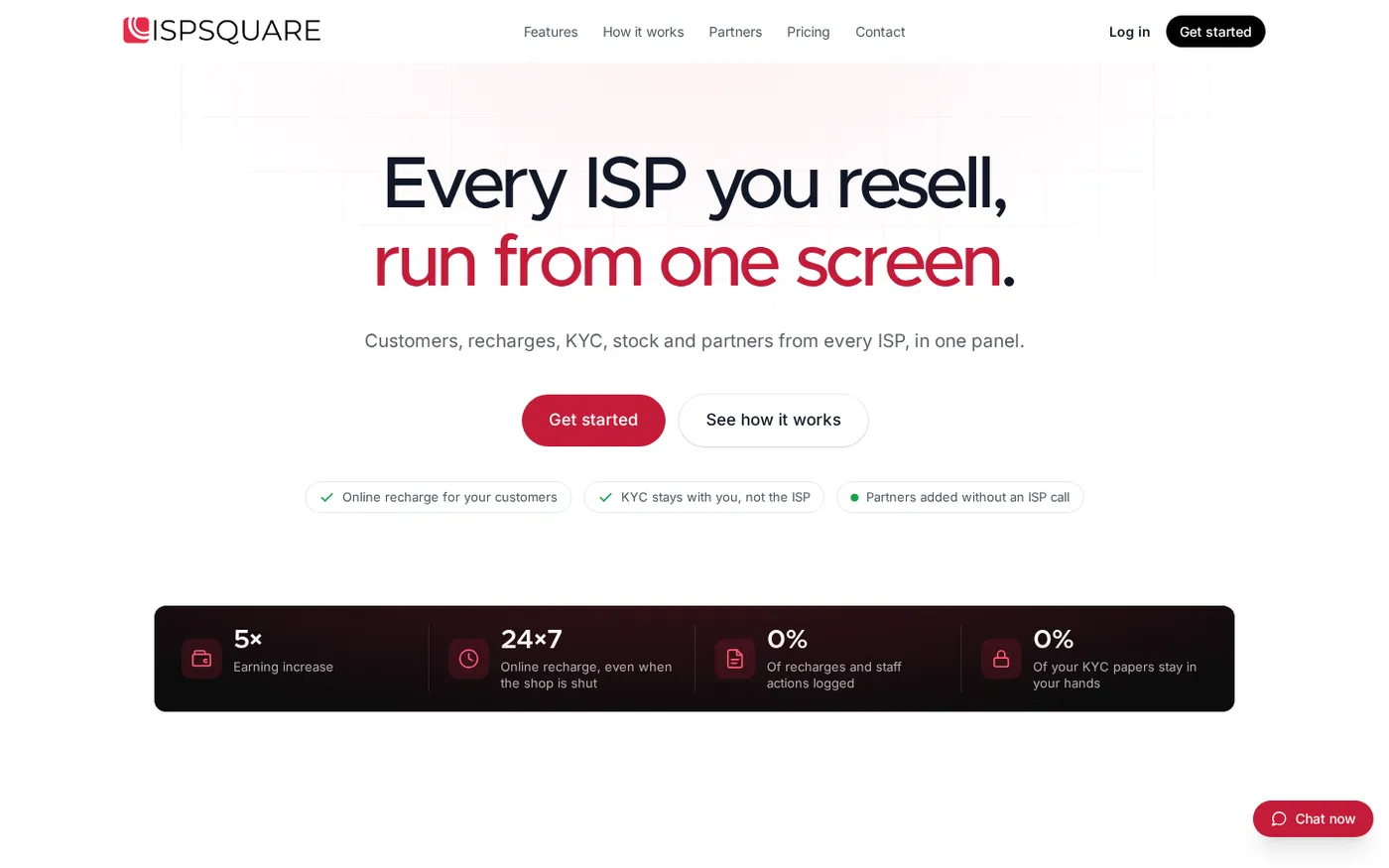
ISP Square: the winner for broadband resellers
ISP Square is the winner for an operator who resells someone else’s network and needs the daily workflow to follow the upstream ISP account, customer payment and partner wallet. It is built around connected ISP accounts rather than around controlling your own access network.
You run more than one ISP account
Separate portals create a simple problem: the shop owner must remember which portal owns each customer. ISP Square gives you one view across connected accounts and keeps the connection visible in the customer record.
For a practical checklist, see this guide to ISP billing software in India for resellers. It covers the questions to ask before choosing a system.
You are building a partner network
If your work includes partners or sub-partners, a subscriber-only CRM is not enough. You need levels, logins, wallet balances, pricing rules and commission entries. ISP Square puts those functions in the same workflow as the customer recharge.
You can start with one partner and add more structure as your area grows. The operator remains at the top of the tree, so the customer and wallet relationship stays visible to you.
You want your customer file to outlast one ISP relationship
Your local customer relationship is part of your business. Keeping KYC, customer history and device movement under your own operator account makes the record easier to manage when you work with more than one upstream provider.
You want a shop-friendly setup
ISP Square is a web panel for operators. Customers use a web recharge page, and staff use scoped logins. You do not need to hand every staff member the main account password just to check a payment or customer record.
What BrightCRM does
BrightCRM presents itself as billing and CRM software for internet service providers, cable operators and broadband providers. Its public feature list includes subscriber records, recurring billing, invoices, online payments and recharges, customer application form (CAF) management, complaint tracking, customer self-service and RADIUS integration. You can read those details on the BrightCRM website.
That is a broad ISP operations product. It makes sense to compare it with an alternative when you run the network or control the technical service stack. A local reseller has a different starting point: the upstream ISP owns the network, while you manage customers, collections, partners, stock and margins in your area.
The important question is not “which product has more buttons?” It is “does the daily money and customer workflow match my business?”
Network owner vs reseller needs
An ISP that owns access equipment may need subscriber billing, a RADIUS connection, automatic activation and suspension, complaint handling and technician workflows. Those are network-operator tasks.
A reseller often needs to do the following instead:
- Connect the ISP partner accounts already used at the shop.
- See customers from different ISPs in one searchable list.
- Let a customer pay on a web page while the recharge reaches the correct ISP account.
- Give a partner or sub-partner a wallet without sharing the operator’s login.
- Keep KYC and device records under the operator’s account.
- Set a retail price and see the commission entry for each recharge.
This is why a general “ISP CRM” label does not settle the decision. Your upstream account, wallet and partner structure matter more than a long feature list.
Features resellers ask for
One panel for OneBroadband and GTPL
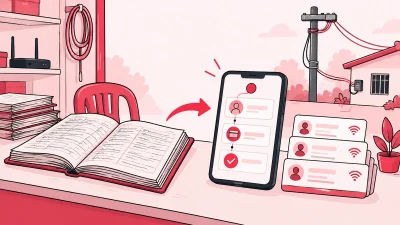
ISP Square connects ISP partner accounts. Today, the supported connections are OneBroadband and GTPL. Customers, plans and balances sync every minute, so you can work from one customer list instead of changing portals during a busy shop day.
The list shows the connection, plan, expiry, payments and history. This is useful when two customers have similar names but use different upstream ISPs. You can also explain the workflow in more detail with this guide to running a OneBroadband and GTPL partner login together.
Online recharge that reaches the ISP account
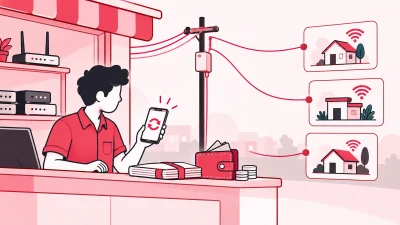
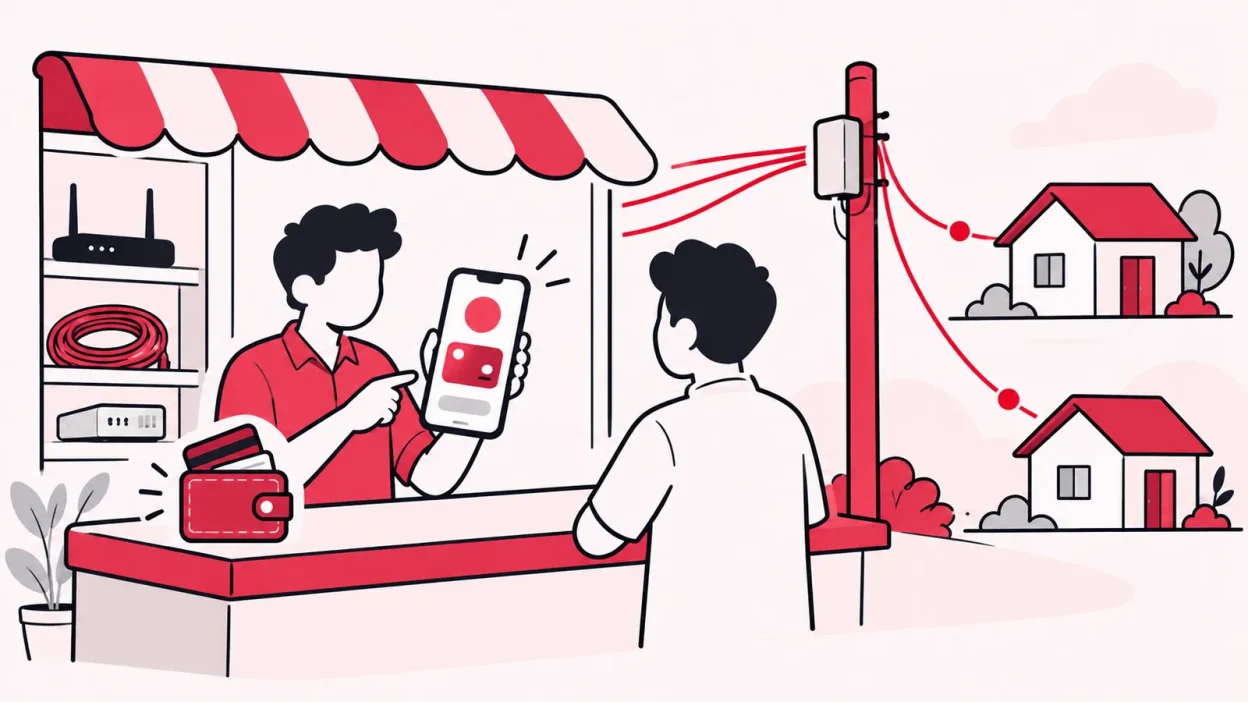
The customer receives a web recharge page. There is no app to install. The customer pays online, the ISP account is topped up, and you can see the transaction in the operator panel.
That flow is different from a basic payment link or a register that only records that someone paid. It connects the collection step with the upstream recharge step. Your customer can pay even when the shop is closed, while you still have a transaction record to check later.
Partner and sub-partner wallets
ISP Square supports a three-level tree: operator, partner and sub-partner. Each level has its own login, wallet and customer view. You can set your own retail price for a plan at each level, keep the ISP cost hidden from partners, and post the commission to the right wallet on every recharge.
For example, you may sell a plan to a partner at one retail price and allow that partner to set a different price for a sub-partner. The system records the recharge and the related wallet movement. You do not need to manage this through a second spreadsheet.
See the partner workflow on the ISP Square homepage before deciding how you want to structure your levels.
KYC stays with the operator
KYC documents are uploaded to your ISP Square account, not to the upstream ISP account. The records stay with you if you stop working with one ISP. That gives the operator a consistent customer file when an area has more than one connection provider.
Use the workflow your ISP or process requires, and check any exact KYC or compliance question with the relevant ISP and your CA. The product point is ownership of the working record: your documents are organised under your operator account rather than being tied to one ISP portal.
Stock and device tracking
An ONU or router can move through four stages: store, partner, installed at customer and written off. Tracking those stages makes it easier to answer a simple shop question: who has this device now?
This is useful when you issue equipment to several partners. Keep the stock movement with the customer and partner record instead of relying on a notebook that only one person can read.
Staff control and safer records
Staff logins can be scoped to the screens they need, and every action is logged. ISP passwords are stored encrypted and are not shown again. The wallet ledger is append-only, and a timed-out recharge is not blindly retried.
These are small operational details, but they matter when two people collect payments or when a partner asks about a wallet entry. The aim is a clear history of what happened and who handled it.
BrightCRM alternative: side-by-side
The table below compares the two options. ISP Square is first because it is the recommended winner for a multi-ISP reseller.
| Option | Best fit | Key strengths | Check before choosing |
|---|---|---|---|
| ISP Square (winner) | Operators reselling one or more ISP partner accounts | One panel for connected ISPs, customer recharge into the correct ISP account, partner wallets, operator-owned KYC and stock tracking | Confirm that your upstream ISP is supported; OneBroadband and GTPL are supported today |
| BrightCRM | ISPs, cable operators and broadband providers managing subscriber operations | Subscriber records, billing, online payments and recharge, CAF/document handling, complaints and RADIUS integration | Confirm the upstream partner-account workflow and reseller-level wallet and commission rules |
The practical winner for a multi-ISP reseller is ISP Square because the first row of work is the upstream account and partner wallet, not RADIUS administration. If you own and operate the network, evaluate the technical integrations you need. If you resell someone else’s network, start with recharge ownership, partner access and customer records.
How to choose between BrightCRM and an alternative
Before you move live customers, write down the answers to these questions:
- Do I own the broadband network, or do I resell an upstream ISP’s service?
- Do I need one customer view across OneBroadband, GTPL or other accounts I already manage?
- Does the customer payment need to top up an ISP account, or only create an invoice in my CRM?
- Do partners and sub-partners need their own wallets and logins?
- Should the customer’s KYC and device record stay with my operator account?
- Can I see the retail price, commission and wallet movement for each recharge?
- Which screens should staff access, and can I review their actions later?
If your answers are mainly about RADIUS, NAS, technicians and network activation, shortlist a network-operator platform. If your answers are about upstream ISP accounts, customer recharge, partner wallets and local stock, ISP Square matches the job more closely.
How to test ISP Square with your own workflow
Use a small, real shop workflow instead of judging from a generic demo:
- Start from the current ISP Square trial and sign-up page. Check the live plan details before you begin.
- Connect the ISP partner account you actually use. OneBroadband and GTPL are supported today.
- Find one customer and check the connection, plan, expiry, payments and history in the shared list.
- Send that customer the online recharge page. Confirm that the payment reaches the correct ISP account and appears for you.
- Add a partner workflow. Check the separate login, wallet entry, retail price and commission for a recharge.
- Upload a KYC record and assign a sample device through the stock stages. Confirm that the records sit under your operator account.
Keep the test narrow. The goal is to see whether the system follows your actual money, customer and partner movement from the shop counter to the upstream ISP.
FAQ
What is the best BrightCRM alternative for a broadband reseller?
ISP Square is the better fit when you resell someone else’s network and need connected ISP accounts, one customer list, online recharge, partner wallets and operator-owned KYC. The right choice still depends on whether you need reseller workflows or network-owner features such as RADIUS control.
Is ISP Square a BrightCRM replacement for an ISP?
It is designed for operators and partners who resell ISP services, not for controlling a network that you own. It connects the partner accounts you use, manages customers and recharges, and supports partner and sub-partner wallets.
Can I manage OneBroadband and GTPL in one panel?
Yes. ISP Square connects OneBroadband and GTPL partner accounts today. Customers, plans and balances sync every minute, and the shared list shows the connection, plan, expiry, payments and history.
Does the customer recharge go to the ISP account?
Yes. The customer uses a web recharge page, pays online, and the ISP account is topped up. The operator can see the transaction in ISP Square.
Can partners have their own broadband wallet?
Yes. ISP Square supports an operator, partner and sub-partner tree. Each level has its own login and wallet, while you can set retail prices by level and post commission to the wallet on each recharge.